
6-week strength program
BLOOM
Learn to lift, one week at a time. Fewer, longer workouts that repeat the same moves and add a little more each week.
- Dumbbells and bands
- 3–4 workouts a week
- 20–45 minutes each
Hip and hip flexor stretches you can do at home, for hips that feel tight after a day of sitting. Some routines add a little strength work for the sides of your hips, and one uses a mini band. Do one on a break from your desk or in the evening, and move slowly with me.
If you don't see what you want,
Got it, it's on my list. Thank you!
6-week strength program
Learn to lift, one week at a time. Fewer, longer workouts that repeat the same moves and add a little more each week.
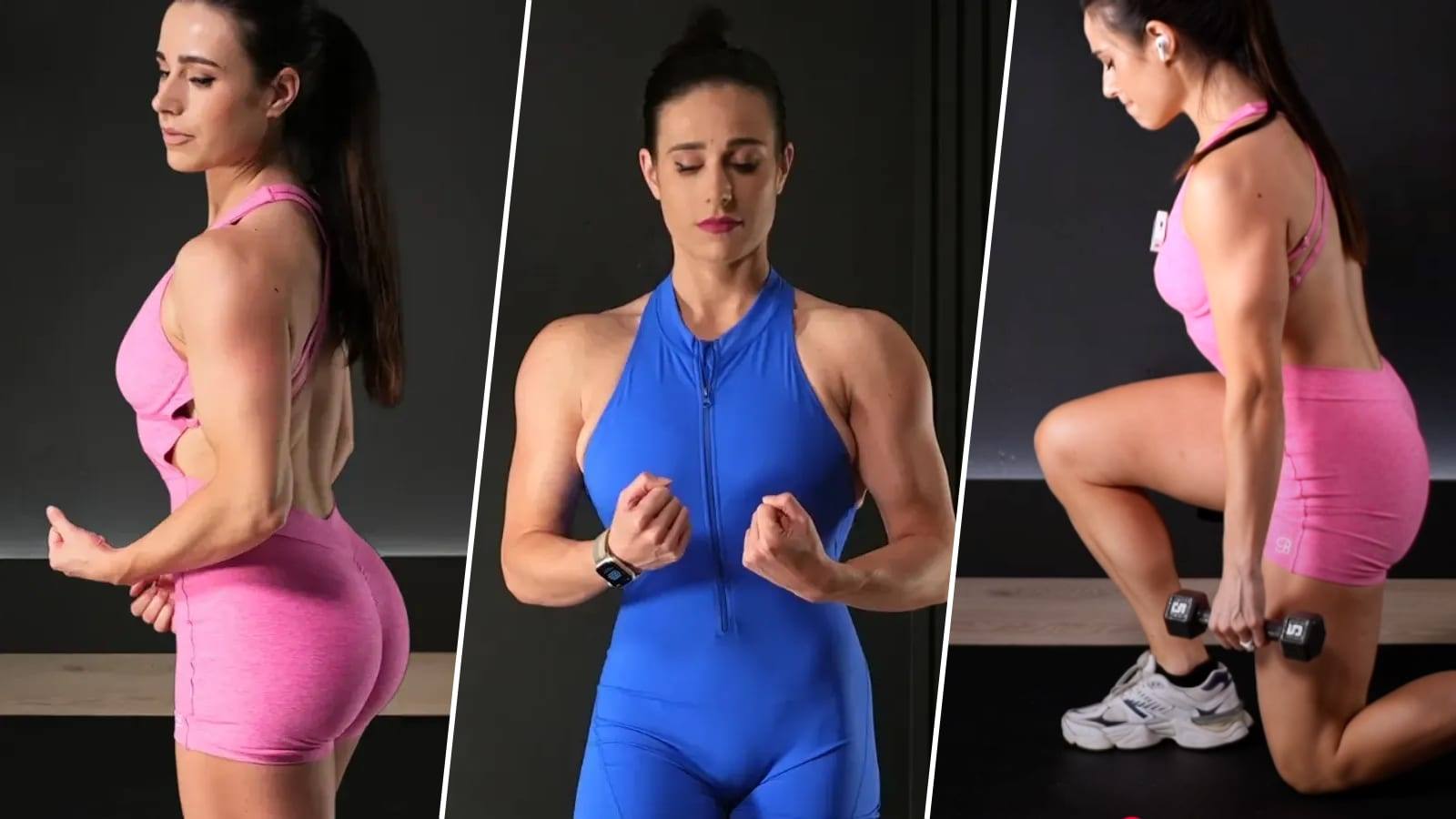
30-day strength program
Short, varied workouts with extra glute and shoulder work. Three of week 1's need no dumbbells at all.
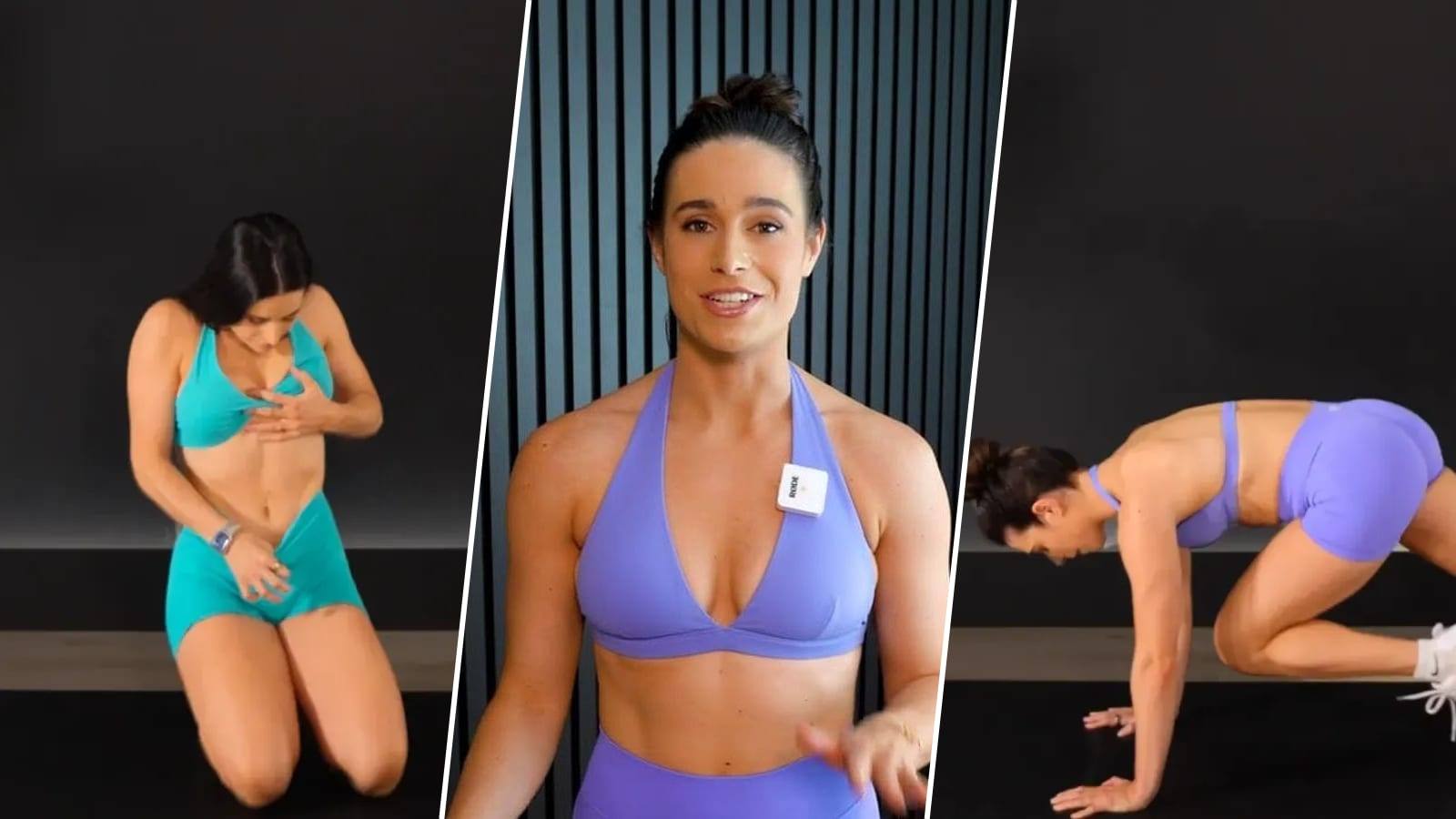
2-week ab program
No-equipment ab workouts for a stronger core. Learn the moves in week 1, then do them twice through in week 2.

Coaching, wherever you live
A plan built around your body, your schedule, and your goals, with me checking your form.
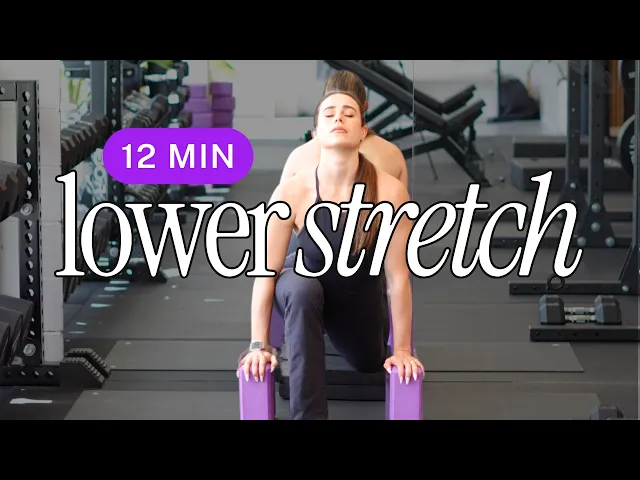
A kneeling lunge with your pelvis tucked under. Kneel on one knee with the other foot in front, tuck your tailbone, squeeze the glute of your back leg, then shift forward an inch or two. The tuck is the part most people skip, and it's where you'll feel the stretch at the front of your hip. For a deeper one, try the couch stretch in my 12-minute lower body stretch.
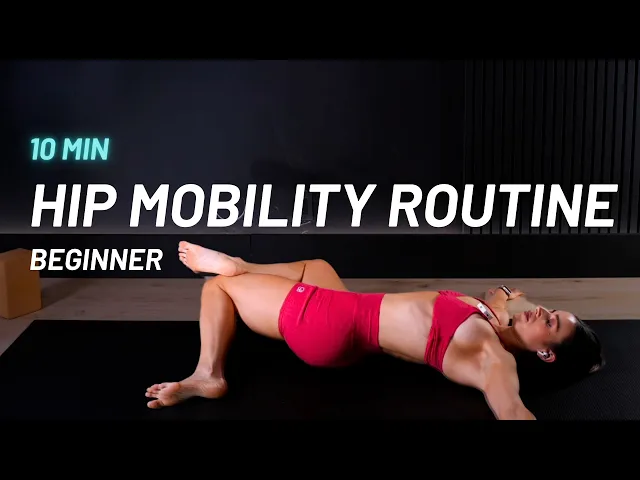
Because they stay bent in one position for hours. Many people feel stiff at the front of their hips after a long day in a chair. Whether sitting really shortens those muscles is still debated, so the answer is the same either way: move your hips through their full range most days, with stretches and strength moves. To follow along: my 10-minute hips and low back mobility.
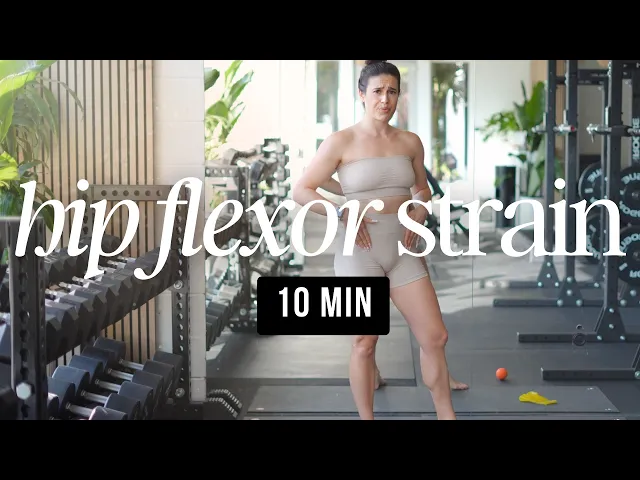
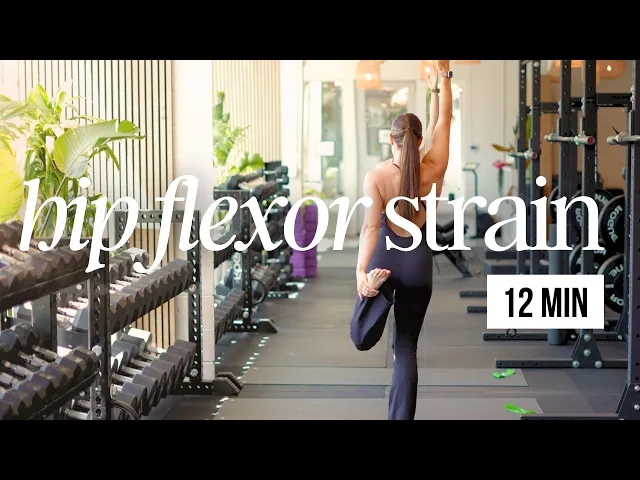
Yes. Strength training through a full range of motion can improve flexibility about as much as stretching, and it makes the muscles stronger at the same time. If your hips still feel tight after lots of stretching, adding strength work is worth a try. My 10-minute hip flexor stretch and strength does both, with wall clamshells and wall hip abductions.
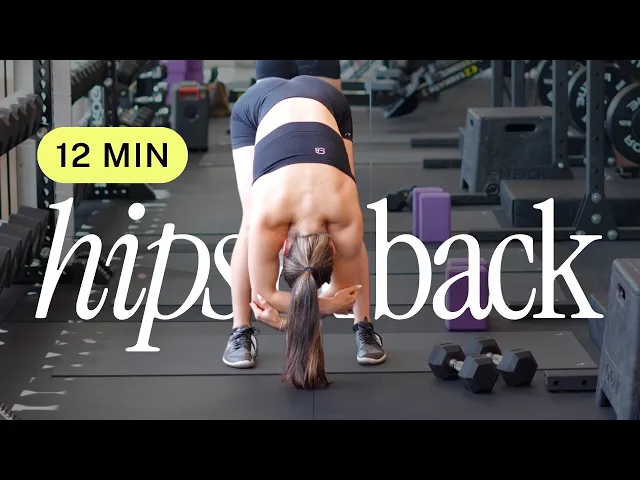
Get up often, then stretch. Standing up and moving every 30 to 60 minutes, even for a minute or two, helps many people feel less stiff. A kneeling lunge or a few slow hip circles needs almost no space. A few times a week, add a longer routine for your hips and back. To follow along: my 12-minute stretch for tight hips and back, beginner friendly with music only.
The muscles at the front of your hip that lift your thigh. The biggest, which runs from your lower spine and pelvis to the top of your thigh bone, is your iliopsoas. One of the muscles at the front of your thigh crosses your hip and helps too, along with a small muscle at the front and side of your hip. Because several muscles share the job, it helps to stretch them in more than one position. To follow along: my 12-minute hip flexor mobility, with a mini band.
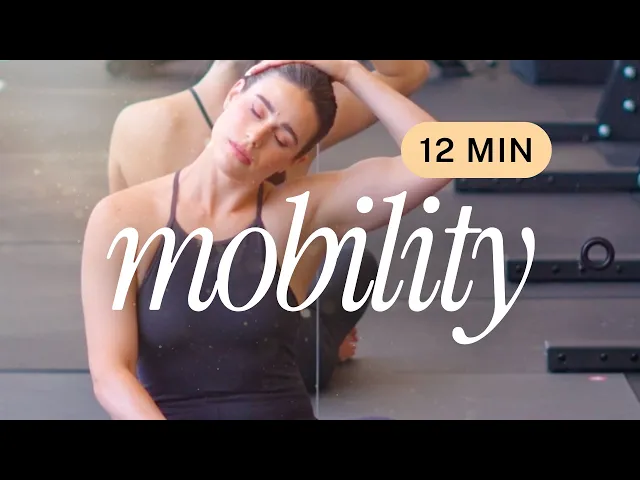
Yes, if your hips are what stop you going lower. A deep squat needs your hips to bend a lot, and a lunge stretches the front of your back hip. Your ankles can limit a squat too, so check both. Move your hips through their full range before you train, then squat and lunge only as deep as you can control. To follow along: my 12-minute neck, back, and hip mobility, with slow hip circles on all fours.
Every free workout page, by what you want to train.
Let’s build a plan for the life you have right now.